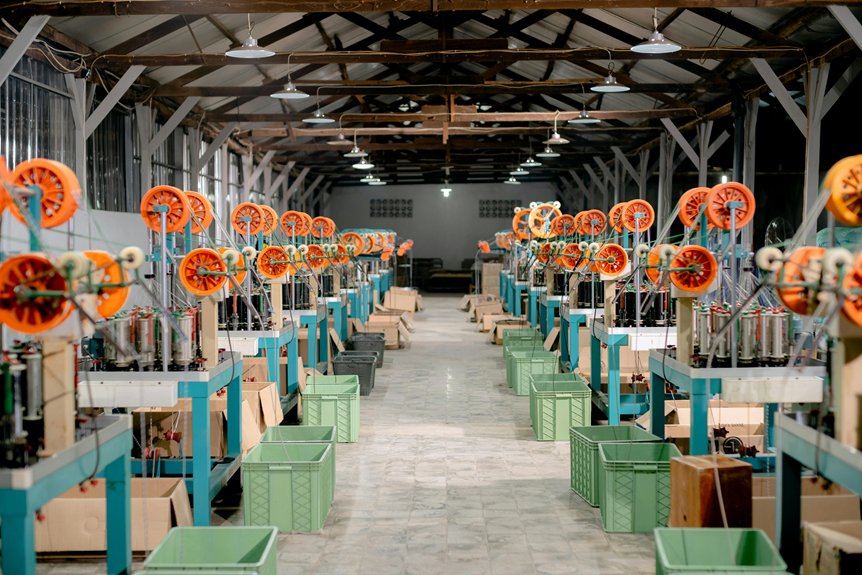
Just as a well-crafted watch relies on precise engineering, Qinux’s manufacturing process hinges on strategic global locations. You might wonder where these products are actually made. By leveraging local expertise and advanced technology, Qinux optimizes both efficiency and sustainability. The selection of these sites isn’t random; it’s influenced by workforce skills and proximity to supply chains. Exploring the intricacies of their production reveals much about their commitment to quality and innovation.
Overview of Qinux Manufacturing Locations
Qinux products are manufactured in various strategic locations around the globe to optimize efficiency and quality. By distributing production across multiple regions, Qinux leverages local expertise, reduces shipping costs, and minimizes lead times.
Each site is selected based on factors like workforce skill, technological infrastructure, and proximity to key markets. You’ll find that these locations not only enhance supply chain resilience but also allow for rapid adaptation to market demands. This global footprint ensures Qinux stays competitive in an ever-evolving industry.
Moreover, the company employs advanced manufacturing techniques and sustainable practices at each facility, aligning production processes with innovation goals. Ultimately, this strategy underpins Qinux’s commitment to delivering cutting-edge products that meet consumer expectations.
Key Facilities Behind Qinux Production
Several key facilities play a crucial role in Qinux’s production capabilities, each strategically positioned to enhance operational efficiency.
These facilities encompass advanced manufacturing plants and specialized assembly lines, designed to optimize workflows and minimize delays. By harnessing modular layouts, Qinux effectively adapts to varying production demands, ensuring swift scalability.
The facility locations are chosen for their proximity to critical supply chains, fostering seamless logistics and reducing transportation costs. Additionally, dedicated quality control centers operate within these facilities, ensuring that each product meets stringent standards before reaching the consumer.
Such meticulous coordination enables Qinux to maintain a competitive edge in innovation, allowing for the rapid introduction of new products while upholding exceptional quality that customers expect from the brand.
The Role of Technology in Qinux Manufacturing
As technology continues to evolve, its integration into Qinux manufacturing processes has become essential for maintaining efficiency and innovation.
Automation plays a pivotal role, streamlining production lines and reducing human error. Advanced robotics enhance precision, while data analytics enables real-time monitoring of operations, optimizing performance.
You’ll find that the use of Internet of Things (IoT) devices facilitates seamless communication among machines, leading to quick adjustments and minimizing downtime.
Additionally, 3D printing allows for rapid prototyping, fostering creative design solutions that meet consumer demands.
By embracing cutting-edge technologies, Qinux not only boosts productivity but also enhances its ability to adapt to market trends, ensuring it remains at the forefront of the industry.
This commitment to technology is key to its ongoing success.
Quality Control Measures at Qinux
While ensuring high-quality standards can be challenging, Qinux implements rigorous quality control measures throughout its production process.
These measures begin with stringent supplier assessments to guarantee that raw materials meet their high standards.
During manufacturing, Qinux employs automated inspection technologies that detect defects in real-time, allowing for immediate corrections.
Each product undergoes thorough testing protocols, including performance, durability, and safety evaluations, ensuring they meet or exceed industry benchmarks.
Additionally, Qinux encourages feedback from users, using this data to refine processes and enhance product design continuously.
Sustainability Practices in Qinux Production
Quality control at Qinux goes hand in hand with a strong commitment to sustainability. You’ll find that Qinux actively integrates eco-friendly practices throughout its production processes.
From sourcing renewable materials to implementing energy-efficient technologies, every step is designed with environmental impact in mind. Qinux prioritizes waste reduction, employing recycling initiatives that minimize landfill contributions.
Their factories utilize sustainable energy sources, which not only reduce carbon emissions but also enhance operational efficiency. Additionally, Qinux engages in community programs that promote environmental stewardship, reflecting its dedication to social responsibility.
The Supply Chain of Qinux Products
Understanding the supply chain of Qinux products reveals how efficiently and responsibly they deliver quality goods to consumers.
From sourcing raw materials to final assembly, Qinux emphasizes a streamlined process that enhances innovation. They collaborate with trusted suppliers, ensuring the materials meet stringent quality standards while minimizing environmental impact.
The logistics are meticulously planned to reduce delays and optimize transportation costs, ensuring timely delivery. Furthermore, Qinux employs advanced technologies for tracking and managing inventory, promoting transparency throughout the supply chain.
This proactive approach not only fosters reliability but also supports their commitment to sustainability. By prioritizing efficiency and ethical practices, Qinux effectively meets consumer demands while paving the way for future advancements in product development.
Future of Qinux Manufacturing and Innovation
As Qinux looks to the future of manufacturing and innovation, it’s clear that the company is poised to embrace cutting-edge technologies that will redefine production processes.
You can expect advancements in automation, artificial intelligence, and sustainable practices to play significant roles in Qinux’s operations. By integrating smart manufacturing techniques, Qinux aims to enhance efficiency and reduce waste, ultimately leading to a more sustainable product lifecycle.
Furthermore, the focus on collaborative robotics will streamline workflows, allowing human workers to engage in more complex tasks.
As Qinux invests in research and development, the company will likely prioritize innovation that meets evolving consumer demands, ensuring its products remain at the forefront of technology and design.
The future looks promising for Qinux and its commitment to excellence.
Conclusion
In exploring where Qinux products are manufactured, it’s clear that the company strategically selects locations to enhance efficiency and quality. The integration of advanced technology and sustainable practices not only boosts production standards but also strengthens the supply chain. As Qinux continues to innovate, you might wonder if this global manufacturing approach will set a benchmark for the industry. Indeed, their commitment to quality and sustainability could reshape how products are produced worldwide, making Qinux a leader in modern manufacturing.